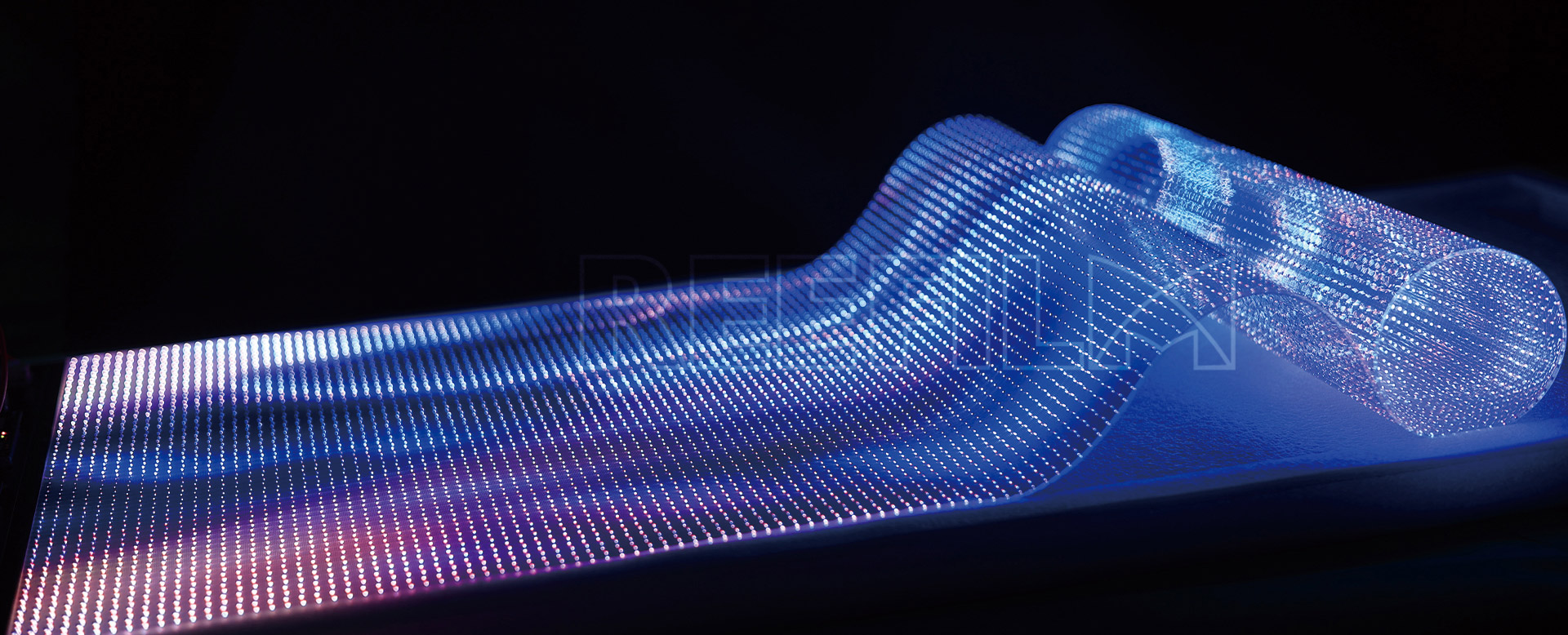
Installing a Reeffilm flexible LED Film can seem like a daunting task at first, especially for those who are new to LED technology. However, understanding the properties of Reeffilm flexible LED film and following a structured approach can make the installation process straightforward and efficient. Reeffilm LED panels are designed with versatility in mind, offering lightweight, bendable, and durable solutions for creating vibrant displays in a wide range of environments. Whether you are planning to use a Flexible Led Display film for advertising, stage design, or architectural projects, the key is to understand how this technology works and how it integrates with existing systems.
A Reeffilm flexible LED film is distinct from traditional rigid LED panels due to its adaptability. Its thin and pliable structure allows it to conform to curved surfaces, wrap around corners, or even create three-dimensional shapes. When preparing to install a Flexible LED Screen, it is essential to choose a stable surface that can support the film without causing tension or stress. Flexible LED display film requires careful handling to maintain the integrity of the LED modules. Any sharp bends or excessive force can damage the circuits, reducing the lifespan of the display. By using proper mounting equipment, such as brackets or frames designed specifically for Reeffilm LED panels, installers can ensure a secure attachment while preserving the flexibility of the film.
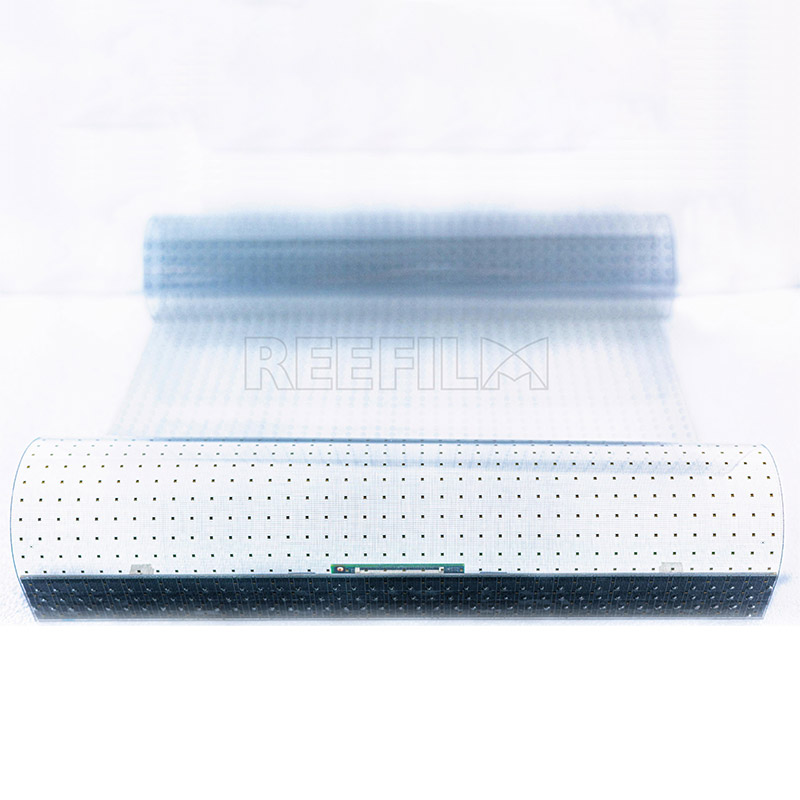
Before starting the physical installation, one should also consider the electrical requirements of the Reeffilm LED panel. Flexible LED screens typically require consistent power supply and proper signal distribution to maintain uniform brightness and color accuracy. Connecting the Led Film Display to a compatible controller is crucial for achieving smooth playback and preventing flickering or color distortion. Many modern Reeffilm LED panels come with modular connectors, which allow for easy connection between multiple film segments. This modularity is especially useful for creating large-scale displays, as it enables seamless integration without compromising the visual quality.
Another important aspect of installing Reeffilm flexible LED film is the environment in which it will operate. Flexible LED display films are suitable for indoor and semi-outdoor applications, but they must be protected from excessive moisture, dust, and heat to ensure long-term performance. Installing the flexible LED screen in areas with high humidity or direct sunlight may require additional protective layers or enclosures. Additionally, ensuring proper ventilation behind the film can prevent overheating and prolong the life of the LED modules. These precautions help maintain the vibrant colors and brightness that Reeffilm LED panels are known for.
When positioning a flexible LED display film, alignment is critical. Unlike rigid panels, which are fixed in place, a Reeffilm LED panel can slightly shift if not securely mounted, leading to misalignment in the overall display. Using level guides, clips, or adhesive backings specifically designed for LED film displays can help maintain precise placement. Installers should also consider the viewing angle and distance from the audience. Flexible LED screens are optimized for wide-angle visibility, but proper placement ensures that colors remain consistent across the display area and that the content is visually impactful.
Previous:



Copyright © 2026 Guangdong Leiyi Optoelectronic Technology Co., Ltd All rights reserved. Privacy Policy
