

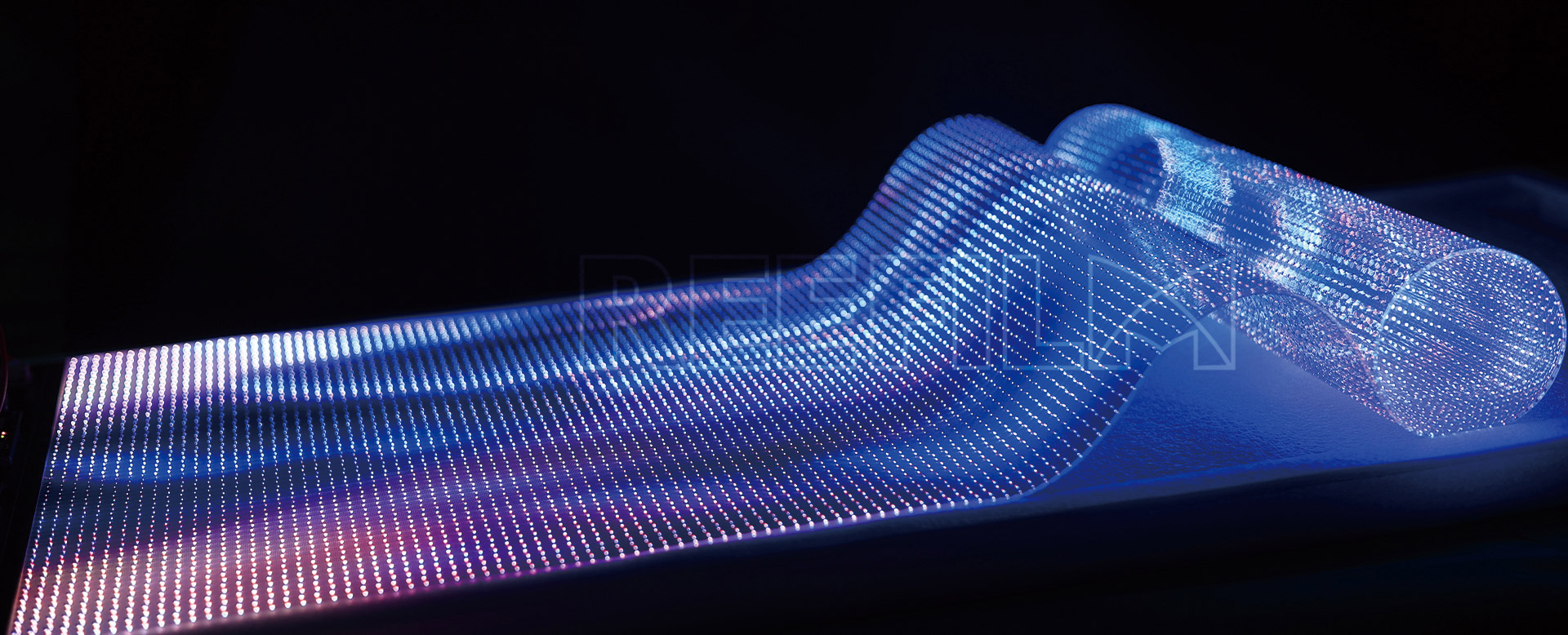
Modern commercial buildings increasingly use glass curtain walls to create open, bright, and visually appealing architectural designs. However, large glass facades also provide valuable opportunities for digital advertising, brand communication, and architectural displays. Transparent Led Film for Glass Curtain Walls offers a practical way to turn building glass into a dynamic display surface without completely blocking natural light or the view behind the glass.
Unlike conventional LED video walls, Flexible Transparent LED Film features a lightweight, ultra-thin, and transparent structure that can be applied to suitable glass surfaces. It allows buildings to display advertising, promotional videos, and digital content while maintaining much of the original glass facade appearance.
For commercial building owners, architects, advertising companies, and system integrators, transparent LED film provides new possibilities for combining architectural aesthetics with digital communication. This article explores its applications, benefits, selection factors, and key considerations for glass curtain wall projects.
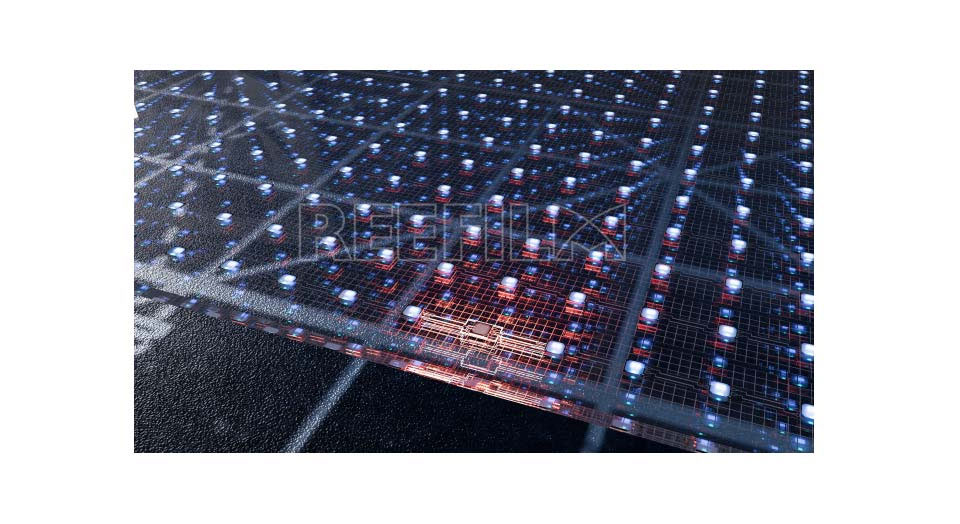
1. What Is Transparent LED Film for Glass Curtain Walls?
Transparent LED Film is a Flexible Led Display solution designed for installation on suitable transparent surfaces, including glass windows, storefronts, and building facades. It uses a transparent display structure that allows light to pass through while displaying images, text, animations, and videos.
Compared with traditional LED display panels, transparent LED film offers several distinctive characteristics:
High Transparency: The transparent structure helps maintain natural lighting and visibility through glass surfaces.
Ultra-Thin Design: Its slim structure reduces the additional space required for display installation.
Lightweight Construction: The lightweight design helps reduce the additional load associated with conventional display structures.
Flexible Configuration: It can accommodate different glass layouts and certain curved or customized surfaces.
Dynamic Content Display: It supports digital advertising, promotional videos, brand messages, and other visual content.
These characteristics make Flexible Transparent LED Film suitable for commercial buildings where digital display performance and architectural appearance both matter.
2. Applications of Transparent LED Film on Glass Curtain Walls
2.1 Commercial Building Facades
Commercial buildings often feature extensive glass curtain walls that provide large surfaces for brand promotion and digital advertising. Installing transparent LED film on suitable glass facades allows property owners to display dynamic content without covering the entire building with an opaque LED structure.
Typical applications include:
Corporate branding and company information.
Commercial advertising and promotional campaigns.
Building announcements and public information.
Digital visual effects for architectural decoration.
For shopping malls, office buildings, hotels, and commercial complexes, transparent LED film can transform ordinary glass facades into digital communication spaces.
2.2 Shopping Mall Glass Facades
Shopping malls require attractive visual displays to promote brands, seasonal campaigns, and retail events. Transparent LED film can be installed on suitable exterior or interior glass surfaces to create large advertising displays while preserving the open appearance of the building.
Retail operators can use the display for product promotions, holiday campaigns, event announcements, and brand advertising. The transparent structure also helps maintain the visual connection between indoor and outdoor spaces.
2.3 Curved Glass Architecture
Modern architectural projects increasingly incorporate curved glass walls and customized building facades. Conventional rigid LED displays may require complex supporting structures to accommodate these shapes.
Flexible Transparent LED Film provides greater installation flexibility for suitable curved glass applications. Its flexible construction and customized configuration can help integrate digital displays with curved architectural surfaces.
Before installation, the glass curvature, display dimensions, and allowable bending requirements should be confirmed with the manufacturer to ensure compatibility.
2.4 Airport and Transportation Buildings
Airports, railway stations, and transportation terminals often feature large glass facades and high-visibility public areas. Transparent LED film can be used to display commercial advertisements, promotional campaigns, and public information on suitable glass surfaces.
Its transparent design helps preserve the openness of these spaces while creating additional opportunities for digital communication and advertising.
2.5 Exhibition Centers and Cultural Buildings
Exhibition centers, museums, and cultural venues frequently use glass architecture to create distinctive interior and exterior spaces. Transparent LED film can turn selected glass surfaces into digital display areas for event information, interactive visual content, and artistic presentations.
It offers architects and exhibition designers more options for integrating digital media into existing building designs.
3. Key Benefits of Using Transparent LED Film for Glass Curtain Walls
3.1 Maintains Natural Light and Visibility
One of the main advantages of transparent LED film is its ability to display digital content while allowing light to pass through the display structure.
Unlike conventional opaque LED screens, transparent film can help preserve the natural lighting and visual openness of glass buildings. This is particularly important for commercial properties where daylight and visibility are important parts of the architectural design.
3.2 Lightweight and Space-Saving Design
Traditional LED display installations may require substantial supporting structures, depending on the display size and building conditions. Flexible Transparent LED Film features a lightweight and thin construction that can simplify integration with suitable glass surfaces.
Its slim profile also helps reduce the visual impact on the original architectural design.
3.3 Large-Scale Digital Advertising Opportunities
Glass curtain walls provide extensive display areas that can be used for commercial advertising and brand communication. Transparent LED film allows building owners and advertisers to make better use of these surfaces.
Dynamic video, animated graphics, and promotional content can help attract attention from pedestrians, visitors, and passing traffic.
3.4 Flexible Design for Different Architectural Structures
Not all building facades have a standard flat layout. Some projects include curved glass, irregular surfaces, or customized architectural shapes.
Flexible LED film can accommodate certain non-standard display layouts, providing greater design freedom for architectural display projects. Customized dimensions and configurations can also be considered according to the project requirements.
3.5 Integration with Existing Glass Structures
Transparent LED film is designed to work with suitable existing glass surfaces. Depending on the product configuration and installation conditions, it can be applied without replacing the entire glass facade with a conventional LED display structure.
This makes it an option worth considering for renovation projects, commercial building upgrades, and new architectural developments.
4. How to Choose the Right Transparent LED Film for Glass Curtain Walls?
Selecting the right LED film is important for achieving the desired display performance. Buyers should evaluate several technical and project-related factors before placing an order.
4.1 Pixel Pitch
Pixel pitch refers to the distance between adjacent LED pixels. It directly affects pixel density and image detail.
For example, P6.25 and P8 are two pixel pitch options available in the I Series. P6.25 has a smaller pixel pitch and higher pixel density, while P8 provides a larger pixel spacing. The appropriate option depends on the screen dimensions, viewing distance, and required image detail.
4.2 Transparency
Transparency is an important consideration for glass curtain wall projects. Buyers should evaluate how much natural light and visibility need to be maintained after installation.
For the REEFILM I Series, the listed transparency is 92% for both P6.25 and P8 configurations. Actual project performance should be evaluated according to the selected product configuration and installation conditions.
4.3 Brightness
Building facades may receive different levels of natural light throughout the day. The display brightness should therefore be selected according to the installation position and ambient lighting conditions.
The I Series offers listed brightness configurations of 2000 cd/㎡ and 4000 cd/㎡ for P6.25 and P8 models. Buyers should confirm the required brightness according to the actual viewing environment.
4.4 Screen Dimensions and Module Configuration
Glass curtain walls often have different dimensions, frame arrangements, and architectural layouts. The LED film configuration should match the available installation area and required display dimensions.
The I Series supports customized sizes and shapes. Its soft-connected power box also provides additional flexibility for creative display configurations.
4.5 Installation Environment
Before selecting a product, evaluate the building's environmental conditions, including temperature, humidity, direct sunlight, and exposure to rain or dust.
For exterior glass curtain wall applications, buyers should confirm the required waterproofing, environmental protection, installation structure, and operating conditions with the manufacturer. Indoor and outdoor installation requirements should not be treated as identical.
5. I Series Flexible Transparent LED Film for Architectural Glass
The REEFILM I Series is designed for glass facade displays and customized architectural applications. Its flexible transparent structure supports installation on suitable building glass walls and curved glass surfaces.
Key product characteristics include:
Ultra-thin display structure with a listed thickness of 2.0 mm.
Lightweight module design, approximately 1.3 kg per module.
High transparency of up to 94% depending on the selected pixel pitch.
Pixel pitch options including P4, P5, P6.25, P8, and P10.
Viewing angle of 160°.
3840 Hz refresh rate.
16-bit grayscale performance.
Customized display dimensions and configurations.
Nova and Colorlight control system compatibility.
For buyers considering P6.25 or P8, the following table summarizes the listed specifications.
| Specification | P6.25 | P8 |
|---|---|---|
| Pixel Pitch | 6.25 × 6.25 mm | 8 × 8 mm |
| Module Size | 400 × 1000 mm | 400 × 1000 mm |
| Pixel Density | 25,600 pixels/㎡ | 15,625 pixels/㎡ |
| Transparency | 92% | 92% |
| Brightness | 2000 / 4000 cd/㎡ | 2000 / 4000 cd/㎡ |
| Thickness | 2.0 mm | 2.0 mm |
| Weight | 1.3 kg | 1.3 kg |
| Refresh Rate | 3840 Hz | 3840 Hz |
These specifications provide a reference for comparing different configurations. The final selection should be based on the actual project requirements and confirmed product configuration.
6. What Should Be Considered Before Installing LED Film on a Glass Curtain Wall?
Although transparent LED film offers flexible installation possibilities, architectural projects require proper planning before installation.
Glass Condition and Compatibility
Check the glass type, surface condition, dimensions, and structural suitability. The selected adhesive or mounting solution must be compatible with the glass and the product design.
Building Structure and Wind Load
Exterior curtain wall projects must consider wind pressure, building height, local weather conditions, and the security of the installation system. The building owner and qualified facade engineers should confirm that the proposed installation meets applicable structural and safety requirements.
Power and Signal Distribution
Large display projects require proper planning for power supply, data transmission, controller placement, and cable routing. The power and signal layout should match the actual screen dimensions and installation arrangement.
Maintenance Access
Maintenance access should be considered before the display is installed. Power connections, control equipment, and replaceable components should remain accessible for inspection and servicing.
Display Content and Viewing Distance
Advertising content should be designed according to the display's pixel pitch and the expected viewing distance. Text size, image resolution, brightness, and video format all affect the final viewing experience.
7. Why Choose a Flexible Transparent LED Film Manufacturer?
Architectural LED display projects often involve customized dimensions, specific glass conditions, and different technical requirements. Working with an experienced manufacturer can help buyers select the appropriate product configuration and plan the display system more effectively.
When evaluating a transparent LED Film Supplier, consider the following factors:
Product Range: Availability of different pixel pitches and product configurations.
Customization Capability: Support for customized screen dimensions and installation layouts.
Technical Support: Assistance with product selection, power configuration, and control system integration.
Product Consistency: Quality control and reliable display performance.
Project Experience: Experience with commercial glass displays and architectural applications.
REEFILM provides Flexible Transparent LED Film solutions, including the I Series for glass facade and customized architectural display applications. Buyers can share their project drawings, glass dimensions, required pixel pitch, and installation environment to discuss a suitable configuration.
Frequently Asked Questions
Can Transparent LED Film be installed on glass curtain walls?
Yes. Transparent LED film is designed for suitable glass surfaces, including building glass facades and curtain walls. The installation method and product configuration should be confirmed according to the glass structure and project conditions.
Does transparent LED film block natural light?
Transparent LED film allows light to pass through its display structure. The actual light transmission depends on the selected model and installation configuration. For example, the REEFILM I Series P6.25 and P8 models have a listed transparency of 92%.
What is the difference between P6.25 and P8 transparent LED film?
P6.25 has a pixel pitch of 6.25 mm and a pixel density of 25,600 pixels per square meter. P8 has an 8 mm pixel pitch and a density of 15,625 pixels per square meter. P6.25 offers higher pixel density, while P8 may be suitable for projects with greater viewing distances.
Can transparent LED film be installed on curved glass facades?
Yes. Certain flexible transparent LED film configurations can accommodate curved glass surfaces. However, the allowable curvature and installation conditions depend on the product design. Confirm the requirements with the manufacturer before installation.
Is transparent LED film suitable for outdoor buildings?
It can be considered for suitable exterior architectural applications, but outdoor installations require careful evaluation of waterproofing, wind load, temperature, sunlight exposure, and structural safety. Buyers should confirm the applicable protection specifications with the manufacturer.
Can the size of transparent LED film be customized?
Yes. The I Series supports customized display sizes and shapes. Buyers can provide glass dimensions, architectural drawings, and display requirements for a project-specific solution.
Conclusion
Transparent LED Film for Glass Curtain Walls offers commercial building owners, architects, and advertising companies a way to combine digital displays with modern glass architecture. Its transparent, lightweight, and flexible design makes it suitable for various commercial facade and architectural display projects.
From shopping mall facades and office buildings to curved glass structures and exhibition centers, transparent LED film provides additional possibilities for digital advertising without relying on conventional opaque display panels.
Choosing the right pixel pitch, transparency, brightness, dimensions, and installation configuration is essential for project success. If you are planning a glass curtain wall display project, contact REEFILM to discuss customized Flexible Transparent LED Film solutions for your application.


