

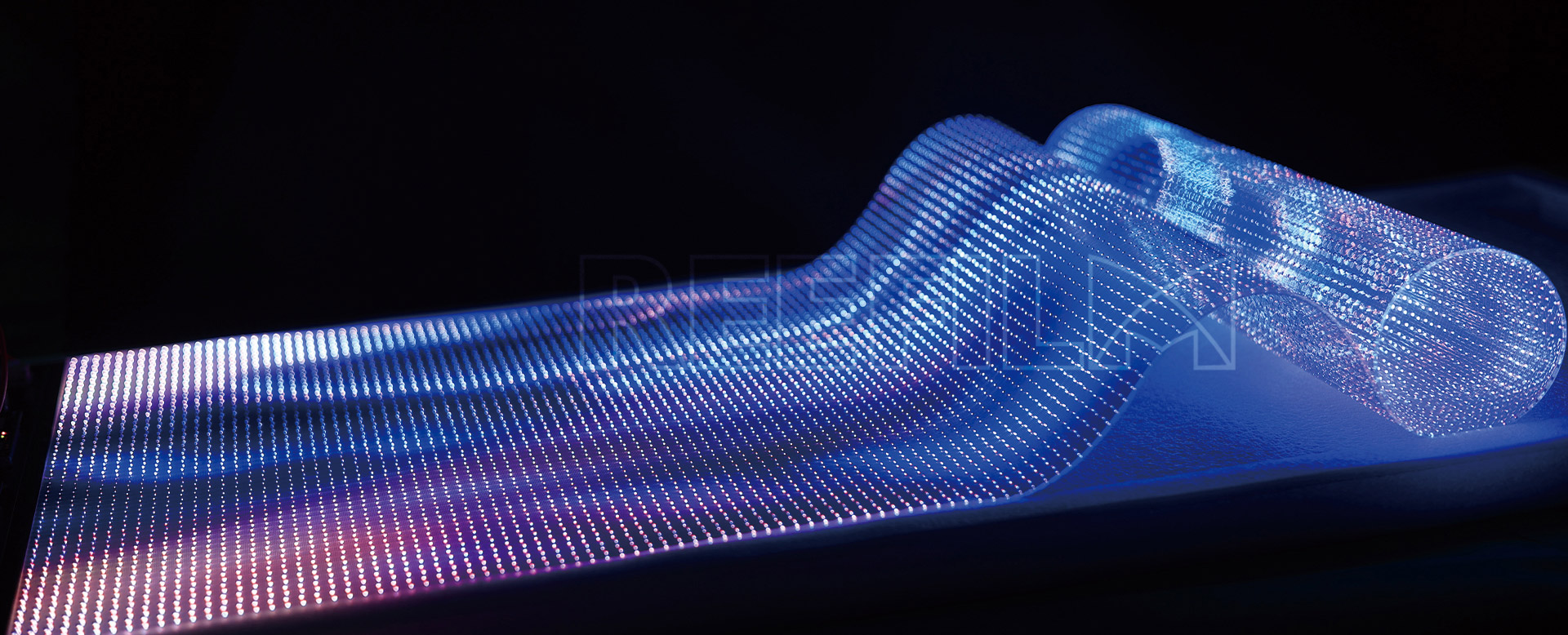
Soft LED Display: Technology Overview and ApplicationsWhat is a Soft LED Display?A Soft LED Display is a flexible light-emitting diode (LED) screen that combines traditional LED technology with innovative flexible materials. Unlike conventional rigid LED displays, soft LED displays utilize flexible substrates such as polyimide or polyethylene terephthalate (PET) with a thickness typically ranging from 0.1mm to 2mm. These displays maintain excellent performance characteristics including a brightness range of 800 to 5000 nits, contrast ratios exceeding 5000:1, and wide viewing angles up to 170 degrees. The pixel pitch can be as small as P1.2mm for high-resolution applications, while maintaining a bending radius as tight as R50mm without compromising display quality.Key Technical CharacteristicsFlexibility: Can bend to radii as small as 50mm with over 100,000 bending cycles without failureThickness: Ranges from 0.1mm (ultra-thin) to 2mm (standard flexible)Brightness: 800-5000 nits (adjustable for indoor/outdoor use)Refresh Rate: Typically 3840Hz or higher, eliminating flickerColor Gamut: Covers ≥110% NTSC for vivid color reproductionPower Consumption: Approximately 30-50% lower than rigid LED displays of equivalent sizeOperating Temperature: Functions reliably between -30°C to 60°CIP Rating: Typically IP65 or higher for outdoor modelsApplications of Soft LED DisplaysRetail and Commercial SpacesSoft LED displays are revolutionizing retail environments with their ability to con


